
ANC local election results show massive support decline
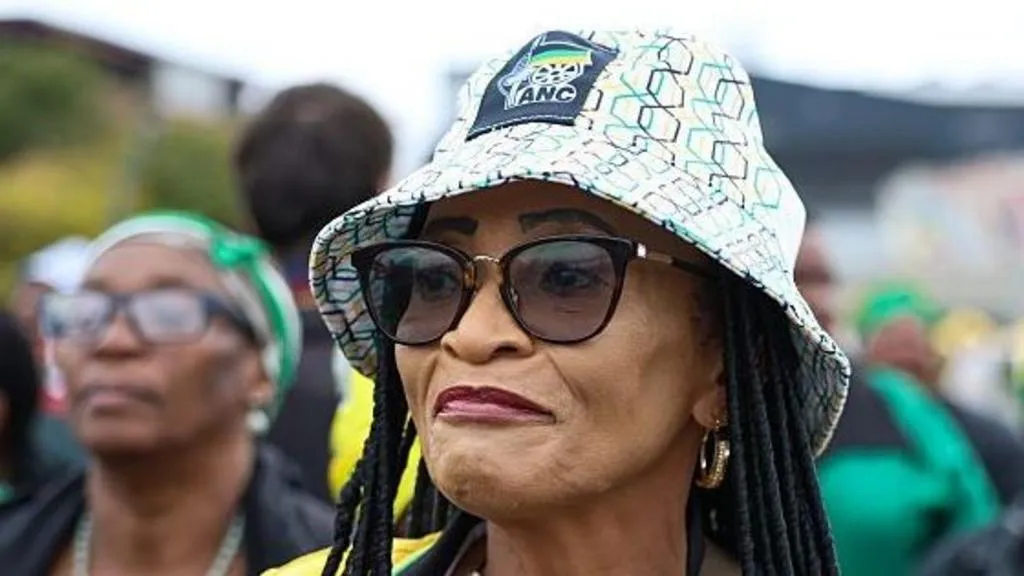
The ANC local election results in South Africa signal a historic shift as the African National Congress suffered its worst electoral performance since the 1994 democratic transition. The party's support plummeted to 31%, down from 46% in the previous local elections, leaving it with a majority in only one of nine provinces. While the ANC remains the largest party, it has lost control of most major urban centers. This decline forces a race to secure power-sharing deals by the 27 November deadline.
The scale of the ANC's electoral decline
The ANC's recent performance represents a significant contraction of its political dominance, which has spanned more than three decades. According to the election data, the party secured only one provincial majority in Limpopo, a sharp decrease from the six provinces it controlled in the previous election cycle. In urban areas, the party's influence has waned significantly, winning the most votes in just two of the country's eight cities, compared to six cities held in 2021.
Despite this loss of territory, the ANC remains the single largest party nationally. However, the shift in voter sentiment is most visible in the economic heartlands of the country. The following table outlines the comparative performance of the major parties in the recent local elections:
| Party | Vote Share | Notes |
|---|---|---|
| ANC | 31% | Down from 46% in the previous election. |
| DA | 25% | Up from 22% five years ago. |
| MK Party | 10% | Third place; led by Jacob Zuma. |
Shifting power dynamics in Gauteng and KwaZulu-Natal
The Democratic Alliance (DA) has emerged as a dominant force in South Africa's economic powerhouse, Gauteng province. In both Johannesburg and Pretoria, as well as the Ekurhuleni region, the pro-business DA secured the highest number of votes. This trend highlights a growing divide in voter preference between the ANC's traditional base and the DA's growing urban support.
In KwaZulu-Natal, the political landscape has been reshaped by the uMkhonto weSizwe (MK) Party. Led by former President Jacob Zuma, the MK Party secured 34% of the vote in the province, making it the largest party in the region. This result mirrors the MK Party's performance in the 2024 national election, where it secured third place and became the official opposition. However, its dominance in KwaZulu-Natal leaves the party dependent on forming coalitions to govern effectively.
Regional voting trends at a glance
- Gauteng: The DA won the most votes in Johannesburg, Pretoria, and Ekurhuleni.
- Cape Town: The DA retained its majority in this major urban center.
- Nelson Mandela Bay: The DA secured the most votes in this region, which includes Gqeberha.
- KwaZulu-Natal: The MK Party became the largest party with 34% of the vote.
The struggle to form local coalitions
As parties approach the 27 November deadline to form local governments, the ANC appears to be actively avoiding a repeat of its national power-sharing arrangement with the Democratic Alliance. While the two parties currently lead the national Government of National Unity (GNU), ANC officials are reportedly seeking alternative partners at the municipal level. According to reports from state broadcaster SABC, many top ANC leaders view an agreement with the DA as a last resort.
Instead, the ANC is courting smaller parties to secure council control. In Gauteng, negotiations are reportedly underway with ActionSA, which emerged as the third-largest party in the province with 17% of the vote. ActionSA's role as a potential kingmaker is significant, though it remains unlikely to partner with the DA due to disagreements over mayoral candidates in Johannesburg and Pretoria. This fragmentation suggests that local governance will be defined by complex, multi-party negotiations rather than single-party dominance.
Tensions within the Government of National Unity
The reluctance of the ANC to partner with the DA locally has raised questions about the stability of the national coalition. The relationship between the two long-standing rivals has been characterized by friction since they entered the GNU in 2024. While the coalition has remained intact, both parties have frequently threatened to dissolve the arrangement due to opposing policy stances.
Internal ANC pressure is contributing to this strain. Some members of the party have expressed anger over the DA's dual role as both a coalition partner and a member of the opposition. A party insider told the Daily Maverick that a proposal for a nationwide agreement to work with the DA at the municipal level was "overwhelmingly rejected" during an ANC members' meeting. This suggests that the political divide is not merely a matter of policy, but a fundamental disagreement over the nature of the partnership between the two largest parties.
Potential outcomes for the national coalition
Political analysts suggest several paths forward for the relationship between the ANC and the DA. Andre Duvenhage noted to the BBC that the country might see the emergence of "asymmetrical coalitions," where parties work together in certain jurisdictions while remaining in opposition in others. This would create a patchwork of governance across South Africa's municipalities.
However, some analysts warn of the risks of such fragmentation. Sandile Swana suggested that any party attempting to leave the GNU specifically because of local-level failures would be "shooting yourself in the foot," implying that the national stability of the GNU is vital for the political survival of its members.
Service delivery and the challenge of municipal stability
Voters' decisions in the local elections were largely driven by concerns over basic service delivery. The decline in ANC support is widely attributed to high levels of corruption and a perceived inability to provide essential services, including electricity, water, and waste collection. While some voters have moved toward the DA, citing its record of competent management in controlled municipalities, others have criticized the party for neglecting poorer areas and townships.
The prospect of improved governance through coalitions remains uncertain. Since 2016, half of South Africa's cities have been managed through power-sharing agreements, which have frequently been described as unstable and chaotic. In Gauteng, in particular, unstable governments have brought the governance of all three major cities under intense scrutiny. When coalition agreements collapse, the resulting political vacuum often disrupts the delivery of essential services.
Experts believe that even if new, stable arrangements are formed, the recovery of local municipalities will be a long-term process. Andre Duvenhage indicated that "turning the ship around" could require a 10-year period. Similarly, Sandile Swana stated that it would take a decade to "cleanse and purify" local councils to restore them as functional, proper municipalities.
