
Nigeria's 2027 election: Tinubu's plan for voter trust
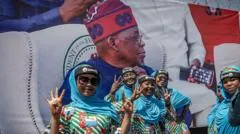
Nigeria's 2027 election looms as President Bola Ahmed Tinubu launches a re-election manifesto titled 'From Reform to Prosperity' to regain public confidence. The All Progressives Congress (APC) plan targets 6% annual economic growth by 2031, the recruitment of 78,000 security personnel, and the construction of 200,000 affordable homes. This follows a first term defined by controversial economic shifts, including the removal of fuel subsidies and foreign exchange harmonisation, which have significantly increased the cost of living for many households. The administration now faces the difficult task of proving these new promises can alleviate the current inflationary pressures felt nationwide.
The economic targets and promises of the APC manifesto
President Tinubu’s re-election bid focuses on transitioning from his initial period of structural reforms to a phase of broad-based prosperity. The manifesto explicitly sets a goal of achieving 6% annual economic growth by the year 2031. To support this, the administration has promised to halve youth unemployment and significantly expand the nation's infrastructure, specifically targeting the housing sector with a plan for 200,000 new affordable homes.
To achieve these ambitious macroeconomic targets, the administration acknowledges that increased production in both the oil and agricultural sectors will be essential. However, these goals face immediate practical hurdles. While the government has introduced a 125bn naira intervention package to support small businesses through grants and loans for manufacturers, the broader economic landscape remains volatile for the average citizen.
Addressing the housing and employment gap
The promise of 200,000 homes is a significant commitment, yet it remains a small fraction of the actual demand. According to a technical committee established by the housing ministry, Nigeria faced an estimated housing deficit of 14.9 million units in 2025. Consequently, the manifesto's targets must be weighed against this massive existing shortfall to determine if they can provide meaningful relief to the population.
The impact of fuel subsidy removal and inflation trends
Economic reforms implemented since Tinubu took office in 2023 have created a sharp divide between macroeconomic stability and household survival. The removal of the fuel subsidy, while freeing up more than one trillion naira in government resources during its first two months, has caused consumer prices to skyrocket. Joshua Osiyemi, head of the BudgIT Foundation platform Tracka, noted that the initial manifesto was designed to prevent the country from slipping further into austerity.
The inflationary pressure has been particularly acute regarding food staples. Analysis by Nigeria's International Centre for Investigative Reporting (ICIR) revealed that the price of imported rice rose by 184% between May 2023 and October 2025. Other essential goods, including beans, garri, and bread, have also seen substantial price increases. This has led to a situation where many families struggle to meet basic daily needs.
| Economic Indicator | Data/Trend | Source |
|---|---|---|
| Imported Rice Price Change | +184% (May 2023 - Oct 2025) | ICIR |
| Headline Inflation (Sept 2026) | 14% (Down from 34% in 2024) | National Bureau of Statistics |
| Jollof Rice Cost Change | -11.5% (June - Sept 2026) | SBM Intelligence |
| Fuel Subsidy Savings | >1 trillion naira (First 2 months) | President Tinubu |
Despite these hardships, some indicators suggest the reforms are beginning to stabilize the economy. According to the National Bureau of Statistics, headline inflation stood at 14% in September 2026, a significant decrease from the 34% peak seen in 2024. Additionally, SBM Intelligence reported that the cost of preparing a pot of jollof rice fell by 11.5% between June and September 2026, marking the sharpest decline in the firm's 10-year Jollof Index. However, Ikenna Okonkwo, head of research at SBM Intelligence, cautioned that this has not yet translated into significant relief, as Nigerians continue to spend an increasing portion of their income on basic necessities.
Security challenges and the recruitment strategy
Insecurity remains a primary obstacle to both economic growth and political stability, particularly in the northern regions. To combat this, the Tinubu manifesto proposes a massive expansion of the security apparatus, including the recruitment of 28,000 military personnel and 50,000 police officers. This is intended to address the pervasive threats posed by kidnap gangs, jihadists, and separatist groups, as well as the ongoing conflict between herders and farmers in central Nigeria.
The security crisis directly impacts the agricultural sector, which is vital for the government's 6% growth target. Many farmers in the north are hesitant to return to their fields due to fears for their personal safety. Joshua Osiyemi noted that farmers are uncertain if they can return home safely to their families after working their land. This insecurity creates a cycle of reduced production and rising food costs.
Ikenna Okonkwo of SBM Intelligence suggested that the situation in the north is more complex than a simple matter of increasing troop numbers. The multifaceted nature of the threats—ranging from organized kidnapping to ideological insurgencies—requires more than just a quantitative increase in personnel to achieve long-term stability.
Political competition and the 2027 landscape
As Nigeria approaches the January 2027 general election, President Tinubu faces significant opposition from prominent political figures. Atiku Abubakar, a former Vice-President, has emerged as a vocal critic of the current administration's fiscal direction. On the social media platform X, Abubakar stated, "My position stands! I will restore subsidy to make life easier and affordable for Nigerians." However, analysts question the feasibility of this promise given the current national budget.
The 2026 budget for Nigeria is approximately 68.32tn naira, with 15.8tn naira already allocated to debt servicing. Joshua Osiyemi argued that the nation is not currently fiscally strong enough to support a return to fuel subsidies. This fiscal reality creates a difficult choice for voters: the immediate relief promised by opponents versus the long-term structural reforms attempted by the incumbent.
Peter Obi, the Nigeria Democratic Congress (NDC) presidential candidate, is also positioning himself as a major challenger. Having placed third in the 2023 election, Obi has secured significant support among younger voters. His "2027 Governance Agenda," launched on 10 November, prioritizes national unity and security. Obi has taken a hardline stance on kidnapping, promising that the government will aggressively pursue those who abduct children.
The power sector and infrastructure bottlenecks
A critical component for the success of any economic manifesto is the stability of the electricity supply. President Tinubu has pledged to increase available electricity generation to 10,000MW. This is a vital necessity for both industrial growth and reducing the cost of living, as unreliable power currently forces businesses and households to rely on expensive generators.
The Nigerian power sector faces deep-seated structural issues that hinder its capacity. While the Nigerian Electricity Regulatory Commission reported an installed capacity of 13,625MW at the end of 2024, the actual average generation was only 4,223MW during that year. This massive gap is caused by ageing infrastructure, gas supply constraints, inadequate maintenance, and chronic funding shortages.
The privatization of electricity distribution has not yet solved these issues. Distribution companies have struggled to invest in essential infrastructure like local transformers and metering systems, largely due to low profit margins. Ikenna Okonkwo noted that the government faces a dilemma: increasing tariffs to attract investors could trigger public revolt, but keeping them low prevents the necessary investment that keeps the sector functional.
