
Sonia Gandhi memoir reveals life of political trauma and duty
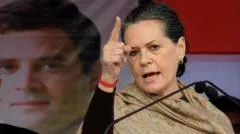
The Sonia Gandhi memoir, titled 'Belonging: A Journey of Love', provides a detailed account of the former Congress party leader's transition from a private citizen to a central figure in Indian politics. Through her recollections, Gandhi explores the profound impact of the assassinations of Indira Gandhi in 1984 and Rajiv Gandhi in 1991 on her personal life and political trajectory. The memoir details her initial reluctance to enter public service, her eventual decision to lead the Congress party, and her observations on the shifting landscape of Indian secularism and nationalism.
The immediate aftermath of the 1984 assassination
The assassination of Prime Minister Indira Gandhi on October 31, 1984, fundamentally altered the life of Sonia Gandhi, who was then a young wife and mother living in the Prime Minister's residence. According to her memoir, the event occurred as she was preparing to take a bath when she heard gunfire that sounded like "different" firecrackers in the garden. The violence, perpetrated by two Sikh bodyguards in retaliation for the Indian army's actions at the Golden Temple earlier that year, left Indira Gandhi dead in a white Ambassador car, covered in blood.
The trauma of the event was compounded by the immediate political consequences for her husband, Rajiv Gandhi. Upon being summoned from a rally in West Bengal, Rajiv was informed that party leaders intended for him to succeed his mother as Prime Minister. Sonia Gandhi recalls a moment of intense fear and opposition, pleading with him that the political transition would lead to his own death. Rajiv's response, "They will kill me anyway," preceded his swearing-in that same evening.
A decade of grief and political retreat
Following the 1984 assassination, Sonia Gandhi largely withdrew from the public eye, a period marked by the deep personal losses that defined her early years in India. Originally an Italian national who moved to India after meeting Rajiv Gandhi in England, she had built a close bond with her mother-in-law, Indira. The subsequent assassination of Rajiv Gandhi in 1991 deepened this sense of isolation and sorrow.
Her memoir describes the difficulty of maintaining public duties while navigating intense personal mourning. She recalls instances where the emotional weight of her loss made public appearances nearly impossible, such as when she broke into sobs while responding to the Dalai Lama regarding her feelings toward her husband's killers. Even family milestones, such as her son Rahul's graduation from Cambridge in 1995, were overshadowed by the absence of Rajiv. For many years, she viewed politics through the lens of the tragedies it had brought to her family, seeing it as a sphere defined by "ambition and greed, hypocrisy and treachery."
The decision to lead the Congress party
The decline of the Congress party, the political vehicle of the Gandhi family, eventually forced Sonia Gandhi out of her self-imposed political retreat. As senior leaders defected and the party lost electoral ground, the pressure for her to take leadership grew. She felt a mounting sense of "pain and guilt" when seeing the photographs of Indira and Rajiv, fearing that the secular and pluralistic vision they championed was being undermined by rising Hindu nationalism.
Finding purpose through the Bhagavad Gita
Sonia Gandhi's transition into formal leadership was not immediate and was met with significant internal and familial resistance. Her children, Rahul and Priyanka, expressed concern about the personal toll such a role would take. To resolve her inner conflict regarding whether she should accept the mantle of leadership, she turned to spiritual study. In January 1997, she arranged private lessons with a Sanskrit scholar to study the Bhagavad Gita verse by verse.
The text provided her with a philosophical framework for her decision. She found clarity in the concept of performing one's dharma, or duty, without being attached to the eventual results. This realization allowed her to conclude that she had to step into the role the duty required of her, despite her personal distaste for the political arena.
The 2004 election and the refusal of the Premiership
One of the most pivotal moments in her political career occurred following the Congress-led alliance's victory in the 2004 elections. Although she had led the campaign, Sonia Gandhi made the strategic decision to decline the office of Prime Minister, a move that surprised both her supporters and her family. While party workers and senior colleagues pressured her to accept the position, arguing that the workers would revolt otherwise, she remained steadfast in her refusal.
| Key Figure | Role in 2004 Transition | Relationship to Sonia Gandhi |
|---|---|---|
| Manmohan Singh | Selected as Prime Minister | Party member and economist |
| Rahul Gandhi | Opposed her decision to refuse | Son |
| Priyanka Gandhi | Urged her not to be forced | Daughter |
Her decision was driven by a desire to avoid the political havoc she believed would be caused by the opposition, the Bharatiya Janata Party (BJP), exploiting her foreign birth. By choosing Manmohan Singh, she described selecting a leader who was "above reproach" and possessed a "deep and consummate understanding of governance."
Observations on the evolution of Indian politics
In her memoir, Sonia Gandhi offers a critique of the changing nature of Indian parliamentary politics, noting a shift away from the "decency and decorum" she experienced when she first entered public life. She observes an increasing trend toward political intimidation and the belittling of opponents, which she links to a broader international movement toward authoritarianism and "heartlessness."
Her critique extends to the current political leadership, specifically Prime Minister Narendra Modi. She characterizes the BJP's vision of India as one shaped by the Rashtriya Swayamsevak Sangh (RSS), promoting a fundamentalism where faith and culture supersede others. Gandhi contrasts this with her own vision of an India defined by "inclusiveness, secularism, and social justice." She notes a distinct lack of personal contact with Modi, describing how he tends to avoid eye contact during formal parliamentary interactions. Despite these differences, she acknowledges his discomfort with the established political elite, noting that she herself often felt disconnected from the privileged political circles of Delhi.
