
Scott Colom Mississippi Senator Wins Historic Race
Scott Colom Mississippi senator victory marks a transformative moment for the Deep South as the Democrat wins a closely contested race. Colom is poised to become the state's first black US senator in more than 150 years and only the third in Mississippi's history. This result breaks a significant political trend in a deeply conservative state that has not seated a black senator since 1875. By securing this seat, Colom overcomes decades of Republican dominance in the state's federal representation, fundamentally altering the local political trajectory.
Breaking a Century-Long Political Drought
The election of Scott Colom represents a major shift in Mississippi's political landscape. The state is characterized by deep conservatism and has not sent a Democrat to the US Senate since 1982. Furthermore, the representation of black senators in the chamber has been absent for over a century and a half.
Colom's victory is notable not just for his party affiliation, but for the historical gap he fills. To understand the magnitude of this win, one must look at the long period of absence between the Reconstruction era and the present day. The state's political trajectory has been defined by a lack of black representation in the Senate following the implementation of Jim Crow laws, which enforced racial segregation across the southern United States.
Historical Context of Senate Representation
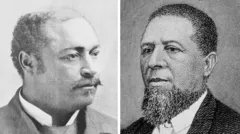
The era of black representation in Mississippi's Senate was a brief window during the post-Civil War period. Before the era of segregation, two men held these seats, both as members of the Republican Party. The following table outlines the historical predecessors Colom follows:
| Senator | Term of Service | Historical Significance |
|---|---|---|
| Hiram Revels | 1870–1871 | First black person ever to serve in the US Senate. |
| Blanche Bruce | 1875–1881 | First black person to serve a full term in the US Senate. |
The Legacy of Revels and Bruce
The historical precedents for Colom's win are rooted in the Reconstruction era. Hiram Revels was selected as Mississippi's first senator after the Civil War. He served for just over one year and was known for campaigning strongly on the platform of racial equality. Revels, who was a minister and served as a chaplain during the Civil War, used his oratorical skills to build support.
Blanche Bruce, who was born into slavery, achieved a different milestone by becoming the first black person to serve a full term in the US Senate. His influence extended beyond his time in the chamber, as he continued to serve in Washington in a role within the Treasury after his term ended. Both men served before the repressive Jim Crow laws fundamentally altered the political and social structure of Mississippi.
In his victory speech, Colom explicitly connected his campaign to the spiritual and oratorical legacy of Revels. "That's an example of the power of prayer, and through our history, there are so many people that lifted this state up through the power of prayer in very dark times," Colom stated.
Mobilization and Voter Turnout
A critical driver behind the Scott Colom Mississippi senator victory was a targeted mobilization effort. The campaign successfully engaged two key demographics: the state's large black population and the youth vote. Analysts expect that both groups turned out in high numbers to influence the close race.
The impact of this mobilization was particularly visible among students at historically black colleges. At Jackson State University, many students reported voting for the first time to support the Democratic candidate. The sentiment among the youth suggests that the election was viewed as a necessary catalyst for regional change.
Voices from Jackson State University
For many young voters, the election results carry personal and emotional weight. Jamyria Dunn, an 18-year-old student, expressed the sense of hope felt by her peers. "I really feel like a change is what we need," Dunn said. She added that seeing Mississippi turn blue would "bring a light to my heart that people just would not understand."
This surge in participation from younger voters and the black community highlights the mechanisms that allowed a Democrat to overcome the state's conservative leanings. By focusing on these high-turnout groups, the Colom campaign managed to navigate a political environment that has been largely hostile to Democratic candidates for decades.
