
Nvidia sex scandal: How personal claims pressure the White House
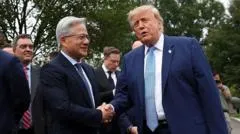
The Nvidia sex scandal involving CEO Jensen Huang has escalated into a national security crisis, placing intense pressure on the White House and US trade officials. Allegations of an affair between Huang and Alice Huang, a former executive at Singapore-based Megaspeed, have raised suspicions of a Chinese intelligence operation targeting a leader with direct access to President Donald Trump. This controversy follows reports that US intelligence suspects Alice Huang of having links to Beijing. The fallout now threatens to expose significant vulnerabilities in how the Commerce Department enforces US export restrictions on advanced AI chips intended to limit China's military capabilities.
Intelligence concerns and the link to Megaspeed
US intelligence agencies reportedly suspect that Alice Huang, a former executive at the Singapore-based company Megaspeed, has links to Chinese intelligence. This suspicion emerged following reports of her affair with Nvidia CEO Jensen Huang, a businessman who maintained an unusually close relationship with President Donald Trump. The scandal has moved beyond personal conduct into the realm of national security, as investigators examine whether the relationship was part of a targeted intelligence operation aimed at a key figure in the American AI industry.
Megaspeed, a customer of Nvidia, is at the center of these concerns due to its role in the global chip supply chain. While the company's chief executive, Tan Yong Pong (also known as James Tan), stated that Megaspeed "takes its compliance obligations under US export control laws extremely seriously" and is "committed to working constructively and transparently with the US government," the company remains under scrutiny. Tan noted that the firm has cooperated with inspections conducted by the US Commerce Department.
The role of Singapore-based Megaspeed
The investigation into Megaspeed focuses on whether the company served as a conduit for diverting advanced American technology to China. Despite the company's claims of transparency, US officials have been pressing for action regarding Megaspeed's potential role in bypassing export controls. This scrutiny is compounded by the fact that Alice Huang’s alleged connections to Chinese intelligence could have provided a bridge for sensitive information or influence to move between Beijing and high-level American tech leadership.
Internal friction over US export controls
The scandal has exposed a deep rift within the US administration regarding how to manage the export of advanced semiconductor technology to China. Since 2022, Washington has restricted the sale of high-end processors to Beijing to prevent the development of Chinese military and technological capabilities. However, enforcing these rules is notoriously difficult, as chips can be legally purchased in third-party countries like Singapore or Malaysia before being diverted to Chinese entities, or accessed via remote computing power in external data centres.
Jensen Huang has been a vocal critic of these restrictions, arguing they are counterproductive because they shut Nvidia out of a major market and incentivize Chinese firms to build their own domestic alternatives. This perspective appeared to resonate with President Trump, who allowed Nvidia to resume certain sales to China last year in exchange for a share of the revenue, though the most advanced Blackwell chips remain prohibited. The current crisis suggests that this pro-market approach may have collided with critical national security warnings.
| Stakeholder | Position on China Export Restrictions |
|---|---|
| Jensen Huang (Nvidia) | Argues restrictions are counterproductive and stifle market access. |
| US Intelligence | Warns of diversion risks and intelligence-linked actors. |
| Treasury Secretary Scott Bessent | Advocates for stricter enforcement and blacklisting of suspected firms. |
| House Select Committee on China | Emphasizes that AI success must not jeopardize national security. |
The role of Commerce Secretary Howard Lutnick
Commerce Secretary Howard Lutnick is facing intense scrutiny for his decision not to blacklist Megaspeed, despite receiving a highly classified memo detailing the risks associated with Alice Huang and the company. While other senior officials pushed for a tougher stance, Lutnick reportedly resisted taking direct action against the firm. This has led to accusations of negligence or favoritism within the Commerce Department, particularly as the department holds the "pen" on the entity list used to restrict trade.
Treasury Secretary Scott Bessent has publicly criticized the Commerce Department's inaction. Speaking to CNBC on Friday, Bessent noted that several government agencies had been in favor of placing Megaspeed on the entity list for months. "But Commerce has the pen... and you will have to ask them about their internal process," Bessent stated, highlighting the frustration within the administration over the lack of decisive enforcement.
Allegations of political intervention in investigations
Further complicating the matter are reports regarding the potential interference in federal investigations. According to the New York Times, Nvidia's general counsel contacted Commerce Department investigators probing suspected chip smuggling by Megaspeed and invoked a senior Trump appointee. Following this intervention, the department allegedly froze the investigation and transferred the case to the Justice Department, a move that has raised questions about whether political influence is overriding security protocols.
Congressional investigations and political fallout
Both Democrats and Republicans are seeking accountability as the scandal widens. Democrats have launched an investigation into the Commerce Department's vetting processes for Chinese companies approved to purchase AI chips. Senator Elizabeth Warren, a leading Democrat on the Senate Banking Committee, has urged Secretary Lutnick to explain why export control loopholes persist, noting that Jensen Huang's departure from his role does not absolve him of responsibility.
On the Republican side, lawmakers are also demanding answers. Representative John Moolenaar, chair of the House Select Committee on China, stated that while it is in the national interest for American AI firms to succeed, they "should never jeopardise our nation's security" by providing Chinese firms with advanced technology. Jensen Huang has reportedly agreed to testify before Congress behind closed doors to address the allegations regarding the affair and the intelligence concerns.
The White House response and Trump's position
The White House has maintained a stance of support for the administration's leadership despite the mounting pressure. While they have not commented on the specific details of the BBC's inquiry, they told the New York Post that President Trump has "complete confidence" in Howard Lutnick, describing him as "the most transformative commerce secretary in modern history." This emphatic defense comes even as reports suggest officials are weighing whether Lutnick should be removed from his position.
Implications for the Trump administration's China policy
The crisis presents a significant challenge for President Trump, who had cultivated a close relationship with Huang and was directly involved in decisions regarding chip sales to China. Because the President was reportedly briefed on the intelligence concerns, the situation is difficult to frame as a mere departmental error. The intersection of a high-profile personal scandal and high-stakes technological warfare has forced a re-evaluation of how much influence private tech leaders hold over US foreign policy.
Ultimately, the scandal forces the administration to answer whether its desire to maintain American tech dominance and market revenue has come at the cost of national security. The central questions remaining are whether the Commerce Department's failure to act was a result of procedural delays or a deliberate policy choice, and what level of awareness the White House possessed regarding the potential for intelligence infiltration through corporate and personal channels.
