
Israel Knesset government formation: Netanyahu vs Eisenkot
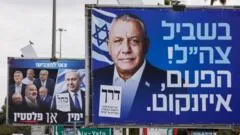
As a new parliament takes its seats, the struggle between Benjamin Netanyahu and Gadi Eisenkot intensifies, with Arab-led parties holding a historic level of influence. This political deadlock follows a deeply fragmented election result that has left no single bloc with a clear mandate. The upcoming weeks will determine whether a stable coalition can emerge from the current impasse. Observers are closely watching how the various factions navigate these complex negotiations to secure a majority in the chamber. The outcome remains uncertain as parties weigh their strategic options.
The struggle for a Knesset majority
The formation of the next Israeli government faces significant deadlock as no single bloc reached the 61-seat threshold required for a majority. Benjamin Netanyahu remains the caretaker prime minister while the political process unfolds, a period that could last from several days to months. The election results have created a fragmented landscape where ideological divides and specific party demands will dictate the next administration.
President Isaac Herzog has tasked Gadi Eisenkot with the responsibility of attempting to form a government. Under the current rules, the designated leader has 28 days to build a coalition, though this period can be extended by an additional two weeks. The outcome of this election is widely viewed as a referendum on Netanyahu, leaving the nation in a state of uncertainty regarding the direction of its leadership.
Seat distribution and parliamentary composition
The current Knesset features a significant shift in demographics and representation compared to the previous term. Nearly half of the newly sworn-in Members of the Knesset (MKs) are newcomers who did not serve in the prior parliament. Additionally, Arab-led parties have achieved a record level of representation, which could fundamentally alter the balance of power during negotiations.
| Political Bloc/Group | Seats Won | Key Leaders/Parties |
|---|---|---|
| Netanyahu Bloc | 53 | Benjamin Netanyahu |
| Eisenkot Bloc | 48 | Gadi Eisenkot |
| Arab-led Alliances | 19 | United Arab List, Joint List |
| Ultra-Orthodox Parties | 13 | UTJ, Shas |
Eisenkot's four principles and coalition obstacles
Gadi Eisenkot, the former army chief and leader of a four-party bloc, has outlined four specific requirements for any party or MK wishing to join his proposed government. These principles are designed to define the ideological boundaries of his coalition but simultaneously create barriers to entry for potential partners. The requirements include:
- Recognition of Israel as both a Jewish and democratic state.
- Acceptance of the values contained in the Declaration of Independence.
- Support for mandatory military, national, or civilian service for all citizens, including currently exempt communities.
- Recognition of Hamas as a terrorist organization and a commitment to dismantling its military and governing capabilities.
These conditions present direct conflicts with several key political groups. The ultra-Orthodox parties, United Torah Judaism (UTJ) and Shas, which hold 13 seats in total, have strongly opposed changes to the military conscription status quo for religious students. The conscription of ultra-Orthodox men, who are currently exempt if they are in full-time religious study, was a major election issue, and all parties in Eisenkot's bloc campaigned to change this status. In return for their support, ultra-Orthodox parties would likely demand major concessions on military conscription, which may be unacceptable to the rest of Eisenkot's bloc.
Furthermore, the Arab-led parties face friction regarding Eisenkot's requirements. While both Eisenkot and the Arab parties emphasize equal national and civic rights for Israel's Arab citizens—who comprise approximately 20% of the population—the Arab parties have not publicly recognized Hamas as a terrorist organization, and the vast majority of Israeli Arabs are not required to serve in the military.
The role of Arab-led parties and the balance of power
Arab-led alliances have emerged as a decisive factor in the post-election landscape, following a surge in voter turnout. The United Arab List and the Joint List secured a combined 19 seats, the highest number for these groups to date. This influence places them in a position to potentially hold the balance of power, though their involvement remains highly contentious among the major blocs.
The paths for cooperation vary significantly between the two main contenders. The United Arab List, which won eight seats, has expressed a willingness to participate in an Eisenkot-led coalition. The Joint List, which won 11 seats, has offered parliamentary support from the outside. However, Eisenkot faces internal pressure from his own bloc; for instance, Avigdor Lieberman of the Yisrael Beiteinu party, which won seven seats, has refused to join a minority government that depends on Arab MKs.
In contrast, Benjamin Netanyahu has explicitly ruled out governing with Arab parties. During his address to the new parliament, he warned against establishing a government dependent on those he characterized as "supporters of terror and haters of Israel," questioning if anyone was prepared to be dependent on those whose goal is the destruction of the Jewish state. Netanyahu also appealed for the formation of a government of national unity to confront the threat of "a nuclear Iran." Eisenkot responded by labeling Netanyahu's speech as "delusional, divisive, hate-filled and shameful," stating that the comments convinced him Netanyahu is unfit to remain in office.
