
Ugandan succession fever: Gen Muhoozi Kainerugaba's military crackdown
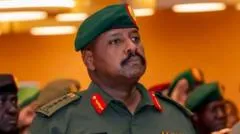
Ugandan succession fever is intensifying as General Muhoozi Kainerugaba, son of long-serving President Yoweri Museveni, carries out a series of high-profile military arrests and political threats. Over the past 15 months, at least a dozen senior generals and officers have been detained under Kainerugaba's authority, fueling speculation that the crackdown is a purge of those opposing his presidential ambitions. While the ruling National Resistance Movement (NRM) denies any formal rejection of his candidacy, Kainerugaba recently threatened Vice-President Jessica Alupo with dismissal, further destabilising the political landscape as the country anticipates a transition of power.
The scale of military arrests and officer detentions
At least 12 senior military officers and generals have been arrested or detained since April 2025, according to an investigation by Uganda's Daily Monitor. These detentions have targeted high-ranking figures, including three former military intelligence chiefs who previously managed the country's most sensitive security operations. The arrests have unsettled the upper echelons of the Ugandan military, as even senior rank appears to offer little protection against the current army leadership.
The nature of the allegations varies significantly between detainees. While some officers face charges of treason, terrorism, or corruption, others have been accused of less formal offences such as stealing military fuel or spying on military communications. The impact of these detentions is evidenced by the high profile of the individuals involved, including former deputy army chief Lt Gen Peter Elwelu.
High-profile military detentions
The case of Lt Gen Peter Elwelu has become a focal point for critics of the current military leadership. Detained on 2 November, Elwelu was accused of plotting to destabilise the eastern Teso region. Following public accusations of treachery by Gen Kainerugaba on the social media platform X, Elwelu was reportedly stripped of his three-star rank and demoted to the rank of Private. The army later confirmed his detention, stating they recovered 15 guns, military uniforms, and two pickup trucks linked to him. However, the legality of this demotion via social media has been questioned by Ugandan media, noting that military regulations do not typically permit such actions through public posts. Elwelu's family has formally rejected the allegations made against him.
Political tensions and the "Muhoozi Project"
Political scientist Dr Gerald Bareebe of York University suggests a direct link between the military arrests and the "Muhoozi Project," a term used to describe the movement to position Gen Kainerugaba as President Museveni's successor. According to Dr Bareebe, senior officers suspected of not supporting this project have been targeted through arrests, detentions, or charges of treason and corruption. He notes that the result is a broad purge affecting both serving and retired officers perceived to be anti-Muhoozi.
This political maneuvering has created deep divisions within the military structure. Specifically, a rift has emerged between the elite Special Forces Command (SFC), which is largely viewed as loyal to the President's son, and other army commanders who remain unconvinced by his potential leadership. Dr Bareebe also raised concerns regarding the impartiality of military trials, stating that many Ugandans view these charges as politically motivated and expect little justice from the proceedings.
There are also allegations that some officers have had their charges dropped only after engaging in closed-door negotiations with the President and his son. According to Dr Bareebe, these negotiations involve pressure on the officers to declare their support for Gen Kainerugaba in exchange for their release.
Internal NRM dynamics and succession proposals
The ruling National Resistance Movement (NRM) is currently navigating conflicting reports regarding its stance on the succession. According to the AFP news agency, a recent closed-door meeting of the NRM's top leadership ended without an agreement on a proposal to position Gen Kainerugaba as the successor to President Museveni. Five party sources told AFP that a vote on the matter was abandoned after several members voiced opposition to the proposal.
Conversely, the Ugandan news website ChimpReports reported that most members at the meeting actually supported the general's potential presidency, though some raised concerns regarding his readiness for civilian leadership. The NRM leadership has officially moved to downplay these reports of internal division.
NRM Secretary General Richard Todwong Awany issued a statement on Thursday confirming that the party met on 10 November to discuss various political, social, and economic issues. He explicitly dismissed claims that the leadership had rejected a proposal to back Gen Kainerugaba, asserting that any official decisions would be communicated through the appropriate channels at the appropriate time.
Controversial leadership style and social media influence
Gen Kainerugaba has distinguished himself from previous military leaders through his frequent and direct use of X to influence domestic and international affairs. Unlike his predecessors, who utilized official military channels, Kainerugaba often uses the platform to announce arrests, criticise public officials, and make personal declarations. This has led to significant diplomatic and political friction.
On 9 November, Kainerugaba used his account, which had nearly 1.4 million followers, to target Vice-President Jessica Alupo. He questioned her loyalty and suggested he should take her position, writing, "Whoever is in that office should prepare to hand it over soon." He further threatened that the government would operate "on military terms" should he become his father's deputy. Following these posts, his account became inaccessible, though it remains unclear if this was a voluntary deactivation or a platform suspension.
Arguments for and against the crackdown
The motivations behind the recent military actions remain a subject of intense debate among analysts. There are two primary interpretations of the current environment in Uganda:
- The Anti-Corruption Perspective: Security analyst Freddie David Egesa argues that the arrests are part of legitimate investigations by different security agencies rather than a targeted purge. He maintains that Gen Kainerugaba's role is to permit these investigations in consultation with the Commander-in-Chief and that detaining high-profile officers is a necessary step to protect witnesses and demonstrate the seriousness of the anti-corruption drive.
- The Political Purge Perspective: Critics like Dr Gerald Bareebe argue that the arrests are a strategic tool to sideline any military opposition to the "Muhoozi Project." This view suggests that the charges of treason or corruption are used as a pretext to consolidate power for the President's son.
The following table summarizes the status of several key officers mentioned in recent reports:
| Source | Reported Stance on Kainerugaba Succession |
|---|---|
| AFP News Agency | Meeting ended without agreement; vote abandoned due to opposition. |
| ChimpReports | Most members backed the presidency, though readiness was questioned. |
| NRM (Richard Todwong Awany) | Dismissed reports of rejection as "completely false." |
| Officer Name | Rank/Role | Allegations | Current Status |
|---|---|---|---|
| Lt Gen Peter Elwelu | Former Deputy Army Chief | Plotting to destabilise Teso region | Detained |
| Maj Gen James Birungi | Former Head of Defence Intelligence | Treason, terrorism, and corruption | Released (after "forgiveness" by Kainerugaba) |
| Maj Gen Abel Kandiho | Former Intelligence Chief | Providing false intelligence and treachery | In detention |
| Brig-Gen Charles Bakahumura | Former Intelligence Chief | Treachery/Similar allegations | Released (after "forgiveness" by Kainerugaba) |
