
Nigerian children out of school: Poverty and kidnap
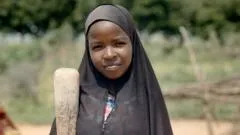
An estimated 19 million Nigerian children are missing out on education due to a complex web of insecurity, economic necessity, and systemic neglect. This massive educational gap is exacerbated by rising rates of banditry in the northern regions, which has led to frequent school kidnappings. Families often face the impossible choice between survival and schooling, frequently prioritizing immediate labor or early marriage over long-term learning. As a result, a generation remains trapped in a cycle of poverty that threatens the nation's future stability and economic growth.
The scale of the educational crisis in Nigeria
The number of Nigerian children out of school has reached critical levels, with Unesco estimates from 2024 suggesting that nearly 19 million children are missing out on formal education. This figure accounts for roughly one in four of the country's school-age population. The crisis is driven by a complex interplay of economic necessity, traditional practices, and physical insecurity.
In many regions, the lack of schooling is tied directly to survival. For families living in extreme poverty, children are often viewed as essential contributors to the household income. In displacement camps, such as the one in Goronyo, children are frequently required to gather firewood for sale or engage in begging to ensure their siblings can eat. This economic pressure often overrides the legal mandate for nine years of free, compulsory education—comprising six years of primary and three years of secondary school.
Barriers to formal education
Beyond immediate poverty, several systemic and cultural factors prevent consistent school attendance:
- Child Marriage: Despite Nigerian law prohibiting marriage under 18, traditional practices in some regions often result in girls ending their education upon marriage.
- The Almajiri System: Many children in this traditional Islamic education system are classified as out of school by Unicef because they are not taught secular subjects like maths and science.
- Financial Constraints: Even when tuition is free, the costs of uniforms, books, and transportation remain prohibitive for the poorest families.
- Infrastructure and Staffing: Chronic underfunding and poor oversight have led to severe shortages in classrooms and teachers.
Insecurity and the threat of banditry
Physical danger has become a primary deterrent for both students and parents. In north-west and central Nigeria, approximately 670,000 people have been forced from their homes by armed robbery and kidnappings, according to the International Organization for Migration. While some attacks are carried out by militant Islamist groups, the majority in this region are attributed to criminal gangs known as bandits, who engage in killing, stealing, and kidnapping.
The fear of violence has a direct impact on school attendance. In Goronyo, a gang on motorbikes once approached a school while shooting in the air; although no one was injured, the incident caused many parents to withdraw their children in fear. This atmosphere of insecurity is compounded by the fact that some children, who should be in classrooms, are instead being engaged in banditry themselves, according to the Minister of State for Education, Prof Suwaiba Sa'id.
Government response and systemic challenges
The responsibility for education in Nigeria is shared between federal, state, and local governments, but the system faces deep-seated issues. The crisis has built up over decades, characterized by chronic underfunding and poor oversight of resources. Prof Suwaiba Sa'id has acknowledged that with Nigeria's growing population, proper investment and oversight have been lacking. She noted that in certain states, no teachers were recruited for an eight-year period.
To combat this "decades of neglect," the government has introduced initiatives like Lumina. This programme aims to support one million girls by 2030 through an accelerated learning programme designed for older girls who have missed years of formal schooling. While the government maintains that education is a "number-one priority," the reality on the ground remains difficult for many. In displacement camps, schools often struggle with inconsistent funding that relies on individuals or organisations rather than the state, and even when lessons are free, many children attend only sporadically because they are needed as breadwinners.
New educational initiatives: Dars Hausa
In response to these challenges, the BBC World Service has launched Dars Hausa, an educational programme designed to reach children across West Africa. Recognizing that many in the region rely on radio—with nearly half of Nigerian households owning one, according to Save the Children—the programme delivers English, maths, and science lessons via radio, social media, and local television partnerships.
The "Dars" name, meaning "lesson" in Pashto and Dari, reflects the programme's origins. It was first launched in 2023 to assist Afghan children barred from school, followed by an Arabic version in February 2025. Dars Hausa aims to bridge the gap for children like Hadiza and Rukayya, providing access to learning through platforms like YouTube, Facebook, X, and Instagram, as well as scheduled radio broadcasts on BBC News Hausa.
