
India's street magicians: Why this ancient tradition is fading
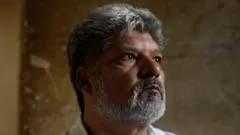
India's street magicians are facing a rapid decline as traditional performance spaces disappear and digital entertainment rises. Once central to public life, performers from the Madari community—who specialize in feats like the legendary rope trick—are struggling to survive. According to performers like Ishamuddin Khan, the profession is effectively on life support. This cultural erosion is driven by tightening urban regulations, the shrinking of public squares, and the long-term economic impacts of the 2020 lockdowns. This article examines the sociological and regulatory factors contributing to the disappearance of these traditional artists.
Why is the tradition of India's street magicians disappearing?
The decline of street magic in India is driven by a combination of changing social habits, urbanisation, and the rise of digital media. For decades, magicians, acrobats, and puppeteers relied on the natural flow of crowds in public squares to earn a living. However, as entertainment has shifted toward short-form digital content, the spontaneous engagement required for street performance has waned.
Urban development has also played a critical role. The transformation of cities has led to the creation of gated residential societies and closed parks that actively bar outsiders, effectively removing the 'stage' from which these artists operate. As Anurupa Roy, founder of the Katkatha Puppet Arts Trust, notes, these shrinking public spaces make it increasingly difficult for performers to find an audience.
The impact of digital entertainment and changing tastes
Beyond the physical loss of space, the psychological landscape of entertainment has shifted. In previous decades, there was significant international and domestic interest in traditional Indian feats, such as the famous rope trick. Today, however, global and local tastes have evolved. The rise of mobile technology means that even when crowds are present, their attention is often captured by personal devices rather than the live spectacle of a street performer. This shift has made it harder for even world-renowned artists to maintain the momentum needed to support a family through their craft.
How does the Madari community maintain these traditions?
The Madari community represents a vital pillar of India's performing arts history, with skills traditionally passed down through generations via family lineages. While there are no official government statistics, Ishamuddin Khan, a prominent 55-year-old magician, states that community records identify approximately 400 Madari families in Delhi, with several hundred more residing in states such as Rajasthan, Telangana, and Uttar Pradesh.
For many in this community, magic is not just a job but a hereditary responsibility. Khan himself learned his craft from his father and uncles, beginning his professional journey at the age of 12. His most famous achievement—the rope trick, where a rope appears to rise into the air for a boy to climb—was a feat once thought to be mythological. It took Khan six years of rigorous practice to master the technique, which he first showcased publicly in 1995 at Delhi's Qutub Minar.
The legacy of the rope trick
The rope trick served as a bridge between folklore and reality, bringing international prestige to Indian street magic. After performing for 30,000 people in Karnataka, Khan toured extensively in the UK, France, Germany, and Japan. However, this international fame has not translated into long-term stability for the community, as the economic structures that supported traveling performers have largely collapsed in the modern era.
What regulatory hurdles do street performers face in India?
Unlike the United Kingdom, which maintains a federal busking framework, India lacks a unified national system for street performers. Instead, artists must navigate a complex web of state-level regulations concerning public order, noise levels, and land usage. This legal ambiguity often leaves performers vulnerable to being misidentified or penalized.
Lawyer Kaushik Mitra explains that performers frequently face municipal and police regulations that govern public spaces, alongside state-specific anti-begging laws. This creates a significant legal grey area where the line between professional street performance and begging can become blurred in the eyes of law enforcement. Even established theatre groups, such as Jana Natya Manch, report significant hurdles when attempting to secure permission for public displays.
Security and the policing of public spaces
Increased security measures in major urban centres have further restricted the movement of performers. Researcher and performer Komita Dhanda points out that tighter security in busy city hubs leaves very little room for spontaneous street art. When combined with the threat of being accused of vagrancy or begging, many artists find the risk of performing in high-traffic areas outweighs the potential financial reward.
How has the economic reality changed for modern magicians?
The economic viability of street magic has plummeted, forcing many veteran performers into low-wage manual labour. For example, Imam Khan, a 40-year-old former magician, now works as a rag-picker near a western Delhi dump, earning approximately 200 rupees ($2) per day. This stark transition highlights the lack of a social safety net for traditional artists when their primary vocation becomes unsustainable.
The COVID-19 pandemic acted as a catalyst for this decline. The 2020 lockdowns halted all public performances, causing many performers to return to their ancestral villages. Many of these artists never returned to the cities, leading to a permanent contraction in the urban performing arts scene. Even those who have returned struggle with significantly reduced earnings.
Comparing pre-pandemic and post-pandemic earnings
The financial impact is best illustrated by the experience of Shahim Khan, a 42-year-old magician in Delhi. Before the pandemic, he could perform four to five shows daily, generating between 1,000 and 1,200 rupees. Currently, he manages only two shows a day, earning between 200 and 400 rupees. To find any work at all, he has been forced to move his performances to industrial areas, far from the traditional public hubs where audiences are most concentrated.
Will the art of Indian street magic survive?
The survival of these traditional skills is currently in doubt, as the intergenerational transfer of knowledge is breaking down. For a trick or a performance style to survive, it requires a dedicated successor to master and practice it. However, economic necessity is driving the younger generation away from the craft.
Ishamuddin Khan’s son, Altamash, exemplifies this trend. Although he performed as a teenager, he has transitioned into the party decoration business. After years without regular practice, his skills have diminished, a sentiment he expressed while struggling to maintain the rhythm of his juggling. The loss of these skills represents more than just an economic shift; it is the potential erasure of a living history of Indian folklore and mythology.
Frequently asked questions
What is the Madari community?
The Madari community is a traditional group of performers in India with a long history of traveling and performing in public spaces. They specialize in various arts, including magic, puppetry, and acrobatics, often passing these skills down through family lineages for centuries.
Why is the rope trick significant in Indian magic?
The rope trick is a legendary feat in Indian folklore that was long considered impossible or mythological. Performers like Ishamuddin Khan gained international fame by proving the trick could be executed, bringing global attention to traditional Indian street performance styles.
How do Indian street laws differ from the UK?
The UK has a federal busking framework that provides guidelines for performers. In contrast, India lacks a central framework, leaving artists to navigate various state-level rules regarding public order, noise, and anti-begging laws, which can lead to legal confusion.
How did COVID-19 affect street performers in India?
The 2020 lockdowns stopped all public performances, causing many magicians to lose their livelihoods. This led to a mass exodus of performers from cities back to rural villages, with many never returning to the urban performance circuit.
Why are performers moving to industrial areas?
Performers move to industrial areas because traditional public spaces, like parks and city centres, have become more restricted due to security and private property rules. While these areas offer more freedom from police, they lack the large crowds necessary for high earnings.
Key takeaways
The Madari community, comprising hundreds of families, faces a crisis in maintaining traditional performing arts.
Urbanisation and gated communities are reducing the available public spaces for street performers to operate.
A lack of a national busking framework in India leaves artists vulnerable to anti-begging laws.
The 2020 lockdowns caused a permanent decline in the number of urban street performers.
Economic pressures are forcing the younger generation to abandon traditional family magic trades.
The cultural cost of urbanisation
The disappearance of India's street magicians is a symptom of a much larger shift in how society interacts with public space and traditional heritage. As cities become more regulated and digital entertainment becomes the default, the spontaneous, communal experience of street magic is being lost. While the economic struggle of performers like Shahim and Imam Khan is evident, the deeper tragedy lies in the fading of a specialized knowledge base. Once these skills are no longer practiced by the next generation, the link to India's rich history of folklore and travelling performance may be severed forever.
