
Coordinated European school bomb threats target thousands
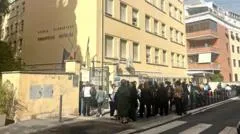
Authorities in Italy and the United Kingdom are currently investigating a massive wave of coordinated email bomb threats that have targeted thousands of educational institutions across the continent. Officials have described the sudden influx of messages as a deliberate effort to cause widespread alarm and disruption within the school systems. Police departments in both nations are working to trace the digital origins of these hoax messages to identify the perpetrators behind the campaign. This surge in threats has forced many administrators to implement emergency safety protocols and notify local law enforcement immediately.
Coordinated cyber-attacks target European educational institutions
The wave of school bomb threats appears to be a coordinated effort to cause alarm across Europe, rather than a series of isolated incidents. In Italy, a single email was sent on Wednesday to the inboxes of 6,300 out of 7,476 state schools, though private institutions remained unaffected. Italian Education Minister Giuseppe Valditara characterized the situation as a "cyber-attack, not a genuine risk," noting a broader pattern of threats targeting supermarkets, hospitals, and flights across the continent.
The messages contain specific, albeit suspicious, identifiers. In Italy, the emails referenced a figure named "Mikhail Andropov, leader of Vilayat di Misoginistan." Similar wording was observed in emails sent to Scottish schools, which instead referenced the same name in connection with a "Red Owl" project. This consistency suggests a centralized source for the digital disruption.
Patterns of disruption in Europe
The school threats follow a recent period of instability in European infrastructure. Last week, Italian airports and various European airlines faced a series of bomb hoaxes that resulted in evacuations and significant operational disruption. While an extremist misogynistic group had claimed responsibility for some previous threats, they have since denied any link to the current wave of school-targeted warnings.
Italian Prime Minister Giorgia Meloni addressed the situation on Facebook, stating that checks so far had not indicated any evidence of "concrete danger." She noted that these reports appear linked to a strategy intended to cause alarm and concern. This follows a period where several airports and airlines in Europe were hit by a series of bomb hoaxes, prompting scares and widespread disruption.
Regional responses and safety assessments in Italy and the UK
Government officials in Italy and the United Kingdom have moved quickly to reassure the public that there is no immediate physical danger. In Scotland, Education Secretary Mairi McAllan stated there was no risk to the public and confirmed that specialist cyber-crime officers are investigating the source. As a parent and a constituency MSP, McAllan noted her understanding of how concerning this would be for parents, pupils, carers, and school staff.
In Northern Ireland, education officials advised schools to remain open unless police provided specific instructions to the contrary. Scottish police had previously stated that the warnings were "immediately assessed" as hoaxes, though some local authorities confirmed that certain schools had been evacuated. Police Scotland advised that there is no requirement to evacuate schools or keep children away from education based solely on the content of the emails.
The impact on school operations varied by locality. While some Italian authorities conducted evacuations, the alarm was largely lifted once checks proved negative. In the Umbria region, head of the central region Stefania Proietti confirmed that law enforcement is working rapidly and carefully to verify each report, but checks conducted so far in Umbrian schools have proved negative.
| Region | Estimated Schools Affected | Official Status |
|---|---|---|
| Italy | 6,300 state schools | Suspected cyber-attack/hoax |
| Scotland | 700+ schools | Investigated as hoax |
| Northern Ireland | Part of 700+ total | Remain open unless advised |
Direct experiences of headteachers and staff
Many school administrators identified the threats as fraudulent almost immediately upon receipt. In Milan, headteacher Massimo Nunzio Barrella noted that the email arrived at 08:59 and appeared "almost comical," describing the text as sounding like a message from "Martians" claiming they had come to "annihilate you." Because of the absurd nature of the text, Barrella chose not to evacuate his school and instead reassured the parents who phoned in.
Other educators utilized digital tools to verify the legitimacy of the messages. Anna Bertato, a headteacher in Milan, reported that an online check of the sender's email address revealed it had already been classified as spam by a university student in Taiwan. Despite the hoax nature of the emails, the psychological impact remains significant; while most schools in Milan did not send pupils home, some parents chose to withdraw their children for the day due to the uncertainty.
The scale of the recent targeting in Italy is notable, with reports indicating that some 280 school headteachers had already received threats in the days leading up to the mass Wednesday incident.
Summary of threat characteristics
- Method: Mass email distribution to state school inboxes.
- Content: References to "Mikhail Andropov" and various extremist-sounding projects such as "Vilayat di Misoginistan" or "Red Owl."
- Classification: Primarily treated as spam or cyber-crime hoaxes by police and officials.
