
Jensen Huang resignation: Nvidia CEO steps down amid scandal
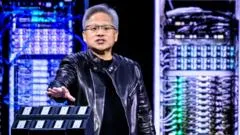
Jensen Huang resignation follows back-to-back revelations regarding two personal affairs that have undermined his reputation and leadership at Nvidia. The 63-year-old CEO stepped down on Thursday after reports emerged of a relationship with an Nvidia colleague, following a previous scandal involving a businesswoman alleged by US officials to be a Chinese intelligence asset. Nvidia, valued at nearly $4tn (£3.02tn), remains a central player in the global AI race. The departure of the man dubbed the 'Taylor Swift of tech' creates significant uncertainty for global markets and the high-stakes technological competition between the US and China.
The sequence of scandals leading to the Nvidia CEO's departure
The resignation of Jensen Huang was precipitated by two distinct personal controversies that moved from tabloid interest to corporate governance concerns. The first controversy surfaced on 29 October, when the New York Times reported on a relationship between Huang and Alice Huang, a businesswoman with no relation to the CEO. According to US officials, Alice Huang is associated with the Singapore-based firm Megaspeed and is allegedly a Chinese intelligence asset.
Following the initial report, Huang admitted to being "unfaithful" to his wife and issued a public apology to his family. While political leaders, including US President Donald Trump, initially described Huang as "honourable" and supported his continued leadership, the situation escalated on Wednesday. Reports emerged detailing a second affair involving Kimberly Powell, Nvidia's vice president of healthcare, who has been with the company for 18 years.
This second revelation prompted an immediate board meeting, resulting in the announcement that Huang would step down from his position. The rapid transition from personal indiscretion to a leadership crisis highlights the tension between Huang's carefully cultivated public persona and the private actions that ultimately triggered his exit.
Timeline of the leadership crisis
- 29 October: Reports emerge regarding a relationship with Alice Huang, an alleged Chinese intelligence asset.
- Post-October: Huang admits to infidelity and apologizes to his family.
- Wednesday: Reports surface of an affair with Nvidia VP Kimberly Powell.
- Thursday: Nvidia board meets and announces Jensen Huang's resignation.
The impact of the leadership vacuum on the global AI market
Nvidia's sudden leadership change arrives at a moment of heightened volatility for the global stock market. As the world's second most valuable company, Nvidia serves as a critical linchpin in the artificial intelligence revolution, providing the essential microchips that power the industry's most advanced models. The company's client list includes the largest technology entities on the planet, such as Google, Meta, Amazon, Microsoft, SpaceX, Tesla, OpenAI, and Anthropic.
The uncertainty surrounding who will succeed Huang is compounded by the company's strategic importance to national security. Nvidia sits at the heart of the technological competition between the United States and China, two economic powerhouses racing for AI supremacy. Because Nvidia dominates the market for the processing chips required for this technology, any instability in its executive leadership can ripple through the entire tech sector.
In the immediate aftermath of the announcement, President Trump suggested that Tim Cook, the CEO of Apple, could be a suitable candidate to lead Nvidia. While such a proposal remains speculative, it underscores the magnitude of the vacancy left by Huang, a man whose influence extended far beyond the boardroom into the highest levels of international politics.
Jensen Huang's professional rise and the 'Taylor Swift of tech' persona
Before his resignation, Jensen Huang had built a reputation as a visionary leader whose influence was comparable to that of Steve Jobs. According to Stephen Witt, author of the biography *Thinking Machine*, Huang was responsible for creating the AI hardware landscape that exists today. Witt described him as a "world-class computer scientist" and a "brilliant" individual who was also known as a "demanding" manager who "really pushes his people to the limit."
Huang's ascent was marked by several key milestones:
- Educational Foundation: An electrical engineering degree from Oregon State University and a Master's degree from Stanford University.
- Company Foundation: The establishment of Nvidia in 1987, eight years after he married his wife, Lori Mills.
- Market Dominance: Transitioning from a gaming-focused chip provider to the dominant force in AI processing.
- Wealth Accumulation: Amassing an estimated fortune of $145bn, according to the Bloomberg Billionaires Index.
This professional success earned him the moniker "the Taylor Swift of tech," reflecting his massive cultural and economic impact. His ability to navigate the political landscapes of both the US and China—having been courted by both President Donald Trump and President Xi Jinping—made him one of the most uniquely positioned executives in history.
The duality of the Huang image
Witt noted that Huang's professional persona was deeply intertwined with a carefully managed image of stability. Despite his trademark black leather jackets and playful investor presentations, Huang consistently presented himself as a devoted family man. This image was central to his identity as an exemplar of the American Dream, a narrative built on his journey from a Taiwanese immigrant to a global tech titan.
The personal life and family ties at Nvidia
The scandal has been particularly damaging because of how closely Huang's professional and personal lives were integrated. Huang had worked for years to cultivate an image of a family-oriented leader, frequently praising his wife, Lori Mills, in public forums. The two met as lab partners in college and married in 1985, long before the rise of Nvidia.
The company's structure also reflected these deep personal ties. Huang's two children, Madison and Spencer, both hold senior roles within Nvidia. This integration of family into the corporate hierarchy meant that the fallout from his personal conduct was not merely a private matter but a direct blow to the company's internal culture and the perceived stability of its leadership. Witt remarked that for someone who had gone to such great lengths to keep his children close and project a "family guy" image, the reputational damage is uniquely severe.
Nvidia's strategic position in the US-China technology race
While the focus has been on the personal scandal, the broader implications of the Jensen Huang resignation concern the geopolitical balance of power. Nvidia is not merely a commercial entity; it is a strategic asset in the race for technology leadership. The microchips produced by Nvidia are the fundamental building blocks of the "new industrial revolution" that Huang himself described as being on par with the advent of electricity.
The following table outlines the critical dependencies and market position of Nvidia during this transition:
| Category | Details |
|---|---|
| Primary Customers | Google, Meta, Amazon, Microsoft, SpaceX, Tesla, OpenAI, Anthropic |
| Market Valuation | Approximately $4tn (£3.02tn) |
| Geopolitical Role | Central to US-China AI competition |
| Key Technology | AI processing chips and circuits |
As the company searches for a new leader, the global community will be watching to see if Nvidia can maintain its momentum. The ability of the successor to manage both the technical demands of the AI era and the complex geopolitical pressures of the US-China relationship will determine whether Nvidia remains the undisputed leader of the technological frontier.
