

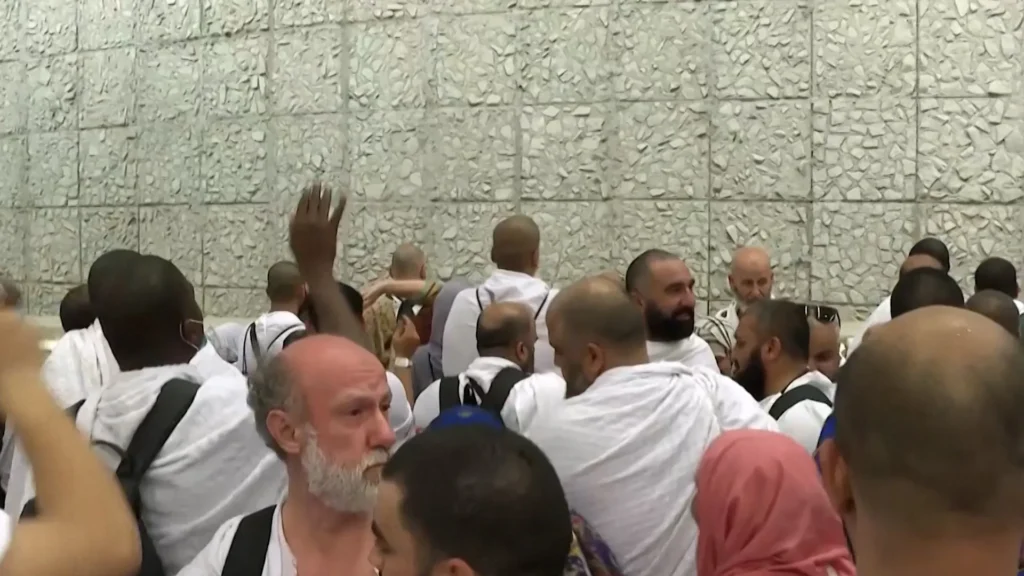
Millions Gather for Hajj Pilgrimage
The annual Hajj pilgrimage, a spiritual journey undertaken by millions of Muslims to the holy city of Mecca in Saudi Arabia, has reached its significant third day. This day is marked by the performance of the ‘Ramy al-Jamarat’ ritual, a symbolic act of stoning that holds deep religious meaning for participants.
The Ritual of Ramy al-Jamarat
More than one million Muslim pilgrims from across the globe are currently engaged in the ‘Ramy al-Jamarat’ ritual. This ritual involves casting pebbles at three stone pillars, which represent the devil. The act symbolizes the rejection of evil and sin, echoing the Prophet Abraham’s resistance to temptation. Pilgrims typically collect small stones from Muzdalifah, a plain located southeast of Mecca, after spending the night there in prayer and reflection.
The stoning ritual is a powerful reminder for pilgrims to resist temptation and reaffirm their commitment to God. It’s a moment of deep personal reflection and communal solidarity.
The ‘Ramy al-Jamarat’ takes place in Mina, a valley approximately five kilometers east of the Holy City of Mecca. On the first day of Eid al-Adha (the ‘Feast of Sacrifice’), which coincides with the tenth day of Dhu al-Hijjah (the twelfth and final month in the Islamic calendar), pilgrims stone the largest of the three pillars, known as Jamarat al-Aqaba. Over the subsequent two days, they stone all three pillars – Jamarat al-Wusta (the middle pillar) and Jamarat al-Sughra (the smallest pillar) – in addition to Jamarat al-Aqaba.
Safety and Logistics During Hajj
Organizing an event of this magnitude, with millions of people converging in a confined area, presents significant logistical and safety challenges. Saudi Arabian authorities invest heavily in infrastructure and crowd management strategies to ensure the well-being and smooth flow of pilgrims. This includes extensive transportation networks, medical facilities, and a large security presence. Despite these measures, the sheer number of participants necessitates careful adherence to guidelines to prevent overcrowding and ensure a safe environment for all.
Significance of Hajj
Hajj is one of the five pillars of Islam and is a mandatory religious duty for all adult Muslims who are physically and financially capable of undertaking the journey at least once in their lifetime. It is a profound spiritual experience that aims to cleanse sins and bring pilgrims closer to God. The pilgrimage encompasses a series of rituals performed over five to six days, culminating in the celebration of Eid al-Adha, which is observed by Muslims worldwide.
The journey not only involves these physical rituals but also a deep inner transformation, fostering a sense of unity and brotherhood among Muslims globally, regardless of their origin or social status. The shared experience of devotion and worship strengthens the collective identity of the Muslim Ummah (community).
Source: Muslim pilgrims participate in stone-throwing ritual on third day of Hajj